Journeys
Cloud
Timothy M. Leonard's books on Goodreads
A Century Is Nothing A Century Is Nothing
ratings: 4 (avg rating 4.50)

The Language Company The Language Company
ratings: 2 (avg rating 5.00)

Subject to Change Subject to Change
ratings: 2 (avg rating 4.50)

Ice girl in Banlung Ice girl in Banlung
ratings: 2 (avg rating 4.50)

Finch's Cage Finch's Cage
ratings: 2 (avg rating 3.50)

Amazon Associate

Entries in Bali (9)

Monday
Aug182014

my cremation


Sekala, what is seen. Nisekala, what is unseen.

After chopping wood and carrying water I returned to Monkey Forest in Ubud, Bali for my cremation ceremony.

It was the best decision I ever made.

Everyday is a celebration.

The family tended my corpse for seven days, washing it with holy water, rubbing it down with rice flour, turmeric, salt, vinegar, and sandalwood powder. Shreds of mirrored glass - banten sutji - were placed on my eyes, pieces of steel on my teeth, a gold ring with a ruby on my mouth, and jasmine flowers on my nostrils. My four limbs received iron nails symbolizing perfect senses allowing rebirth as a stronger and more beautiful human being.

Since the 13th century every Balinese liberated their soul through cremation to heaven for judgment and rebirth in their grandchildren. Failure to liberate the soul haunted descendants as a ghost.

My corpse was wrapped in a white cloth, a straw mat and tightly bound with more white cloth on a rante of split bamboo. On cremation day it was placed in a tower constructed of wood and bamboo covered in rattan, decorated with colored paper, ornaments, glittering tinsel, and small mirrors. The tower represented the Balinese conception of the cosmos.

In a series of layers were bamboo platforms. The base signified the underworld with three ascending platforms representing the visible world, a pavilion for the body, and the tumpang or heavens.

French, German, American, British, and Japanese tourists wearing ceremonial sarongs holding camcorders and 35mm cameras mingled with local food and drink sellers. A Balinese man sold film from a suitcase. Women hustled soft drinks, water, and carved ebony statues. Local children trailed an ice cream man.

Festive crowds climbed crumbling moss covered earthen walls in Pedang Tagal anticipating my body exiting the family home. A towering ceremonial black bull waited as people gathered at the junction of two narrow dusty roads in sweltering heat.

My body was carried out and placed on the golden pavilion behind the 15’x15’ bull.

Women in ceremonial dress led a procession balancing effigies and offerings of fruits, rice and vegetables.

Forty yelling, screaming men in black and white checkered sarongs lifted the bamboo platform onto their shoulders. Laughing, they ran down the road jostling the bull back and forth in erratic semicircles to confuse angry spirits. Jubilant villagers doused the carriers and bull with streams of water. People stopped cooking, resting, working, and painting. They emerged from walled compounds to witness the ceremony.

My widow and children waited with 100 people in Monkey Forest. Noise and confusion mixed with laughter as the black bull and golden tower entered a clearing. The men struggled up a steep dirt hill under the weight.

The bull was placed under a cremation platform - bale pabasmian - constructed of bamboo with a white sky cloth and gold tinsel roof. Reeds secured the bull on four corner poles. The music stopped.

Women worked the crowd selling water and soft drinks in searing heat. Tourists replaced film.

Men cut the bull’s back open with a large knife under the sky pavilion and removed a section. I was lowered from the tower accompanied by cymbals, drums and clanging instruments. Women circled three times around the bull with offerings.

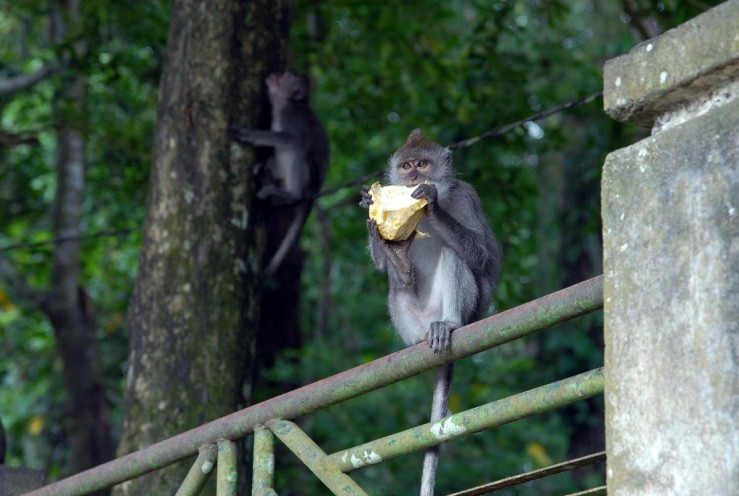
Hot, tired, sweaty, laughing men lifted me up and passed it to a group near the bull. They lowered it inside. My widow placed family heirlooms on my corpse. Forest monkeys chattered overhead. A black and white butterfly danced in fractured light.

A Brahmin priest in black stood on scaffolding singing and chanting prayers with my family. They cut a string binding white cloth, poured holy water from clay pots over me, passing them to a family member who smashed them on the ground.

The priest accepted a flowering plant and sprinkled soil on me. Another man added yellow silk. People handed them family items wrapped in white cloth to be placed inside. More clay pots were emptied on my form and destroyed on earth.

A tourist in the shade wrote a postcard.

A family member took a final photograph of me. An effigy of reeds and tinsel was dismantled and placed on me. The lid was replaced on the bull and secured with bamboo lashed diagonally across the corners.

Someone lit my fire.

The bull and flowers burned quickly as wood, bamboo and rattan sent smoke and ash circling into sky. Cloth shells flamed away as heat jumped to the tinseled golden roof.

Italian and French film crews worked close to the fire.

The crowd evaporated. The ground was littered with plastic water bottles and ashes.

My widow sat in the shade eating, drinking, and talking with our children and friends about sekala, what is seen, and nisekala, what is unseen. 
 

Sunday
Aug182013

Through the center

I climbed through the center of Bali inside magical light past an extinct sacred volcano at Lake Batur carrying spare ammunition, a small portable typewriter, a map carved on narwhal bone, a roll of scented four-ply toilet paper, codices or painted books and texts on bark paper called Amate, and cactus fiber including palimpsest animal skins and dialogue of Mayan origin.

My hair caught fire. Gathering flames I lit a piece of bark for guidance.

I mixed volcanic ash with water, creating a thick paste of red ocher, a cosmetic balm rich with antioxidants.

I applied this to my skin to gain entry and passage through the spirit world of ancestors. 

Source: A Century is Nothing.

Wednesday
Mar182009

Monkey Forest

“I know where Monkey Forest is,” she said.

“The bull is placed under a cremation platform (bale pabasmian) constructed of bamboo with a white "sky" cloth and gold tinsel roof. Reeds secure the bull on four corner poles and music stops.

“It’s like a party,” I said. “Women work the crowd selling water and soft drinks in searing heat. Tourists replace film and run videos.”

“Men cut the bull's back open with a large knife under sky pavilion and remove a section. Music starts and the body is lowered from the tower accompanied by cymbals, drums and clanging instruments. Women carry offerings and lead an honor procession three times around the bull.

“All the men are hot, tired, sweaty, and laughing. They lift the body up and pass it to a group along the bull. They place it inside. The widow places family heirlooms on the corpse as forest monkeys swing and chatter through overhead jungles. A black and white butterfly dances.

“A Brahmin priest in black stands on scaffolding with the family singing and chanting prayers over the body. They cut a string binding white cloth, pour holy water from clay pots on the body and pass pots to a family member who smashes them on the ground.

“Then the priest takes a flowering plant and sprinkles soil on the body. Another man adds yellow silk. People hand them family items wrapped in white cloth to be placed inside. Clay pots are emptied and smashed.

“A family member takes a photograph of the body. An effigy of reeds and tinsel is dismantled and placed on the body before the lid is replaced on the bull and secured with a long piece of bamboo lashed diagonally across the corners. Someone lights the fire.

“The bull and flowers burn quickly as wood, bamboo and rattan sends smoke and ash circling into sky. Cloth shells flame away as heat jumps to the tinsel and golden roof.

“Italian and French film crews work close to the fire.

“The crowd evaporates. The ground is littered with plastic water bottles and ashes. The widow sits by a path in the shade eating, drinking and talking quietly with her family and friends aboutsekala, what is seen, andnisekala, what is unseen.”

“Wow!” Michiyo said when Smith finished. “Amazing!”

“Yes,” he said. “It’s about impermanence and perception. When people change their attitudes they change their perceptions.”

“Is that all that happens?” She wanted to know.

“Well, it’s about connections on many levels, you see. When people change their attitudes it affects their values and changes their belief window.”

“What’s a belief window?”

“How you see things. Some cultures think with their heart instead of their head.”

“I see.” Our laughter shattered the calm silence. Wild cranes lifted from the rice paddies into blue sky slashing their shadows through light. The sky is the same color no matter where you are.

Metta.

Thursday
Feb192009

The Rice Farmer


Bali sunset light. A light of soft gentle music from a choir of painters. A tapestry on a loom of sky. Mountains stand strong and silent in the distance. 

Ducks settle down in their straw hut as a young waitress reads in an upstairs section of a bamboo restaurant. Business is slow.  Downstairs a child cries as someone slices dark green vegetables on a chopping block mixed with laughter. Motorcycles race along a twisted road blazing shrill horns. Birds and gekkos create twilight music as day slowly fades.

A narrow dusty dirt uphill path winds through the jungle. A woman with deeply lined brown skin wearing a purple sarong passes in and out of shadows. She maintains a steady pace balancing a stack of red bricks on a torn dirty yellow towel wrapped around her head. Her brown eyes glance down at the rocky terrain and up, straight ahead.

A gaunt rice farmer cleans debris from around rice stalks in a paddy near Monkey Forest Road. He wears faded blue shorts, a torn yellow t-shirt and sweat-soiled straw hat.

He pulls, smooths, and pats thick wet muddy soil in the water while tossing clumps on a pile of rocks at a construction project.

As daylight escapes he moves along a rice paddy terrace, stopping to splash water on his arms and legs removing the mud of his day with strong fingers and hands sliding up and down leather skin. 

Picking up an old hoe, he places it on a thin shoulder and continues along narrow edges inspecting adjacent paddies. Calloused feet trace a zig-zag pattern toward a dark horizen of trees and thick tropical forest. His figure becomes smaller and smaller.  

A slight breeze moves through green rice. Rice paddy water stands silent.

Metta.

Page 1 2