


Friday
May072021
Lao Girl Bubble
 Share Article
 Leica Fotographie International (LFI) selected one of my images for their KIDS gallery.
Thanks to them and here she is. Happy, strong and brave. It's good to be alive.


Leica Fotographie International (LFI) selected one of my images for their KIDS gallery.
Thanks to them and here she is. Happy, strong and brave. It's good to be alive.
Learn. Play. Share.
500 grade 10-11 students live at the school. They’ve come from distant Shan state villages and Myanmar areas. They are their parents’ social security.
The school has an excellent reputation for matriculation results.
Segregated classes. Walking on campus, girls shield their faces from distant boys. No social testosterone distractions. Zero gadgets.
They study Burmese, math, history, physics, chemistry, science, biology and Magic and Potions from 6-11, 1:30-6, 7:30-11 p.m. Sonorous voices echo daily.
They leave school one day a month. Don't let school interfere with your education.

The Wild West Village - 2.5 hours south of Mandalay - pop 10,000
Horse drawn cart traps.
One traffic light. Two motorcycles is a jam.
Green for go.
Twenty minutes away on foot, an extensive traditional market covered in rusting PSP sheets is a delightful adventure - returning to the source of community, dark-eyed local curiosity, street photography, laughter, and a floating babble of tongues inside a labyrinth of narrow uneven dirt paths.
Footprints on stone and dirt meander through forests and mountains of oranges, apples, bananas, red chilies, green vegetables, thin bamboo baskets of garlic and onions, farm implements, varieties of rice, clacking sewing machines, basic commodities, steaming noodles, cracking fires, snorting horses.
Sublime.
Blindfish heads whisper The Sea, The Sea. Silver scales reflect light.
A woman hacks chickens. Blood streams down circular wooden tree rings.
The gravity of thinking sits on a suspended handheld iron pan scale.
A white feather sits in the other pan. Balance.
Twenty-six varieties of rice mountains peak in round metal containers or scarred wooden boxes.
Horse drawn cart traps unload people and produce. Neck bells tinkle: Star light star bright first star I see tonight, I wish I may I wish I might get the wish I wish tonight. Well. Fed horses paw dirt.
Ancient diesel tractor engines attached to a steel carcass hauling people and produce bellow black smoke.
Old wooden shuttered shops with deep dark interiors display consumables, soap, thread waiting for a conversation, stoic curious dark eyed women, others laughing at the benign crazy traveler.
A happy ghost-self sits in meditative silence, absorbing rainbow sights, sounds, colors, smells, feeling a calm abiding joy.


Kampot ceremony
70,000 years of pointillism
Walking makes the road
Khmer wedding music clanging symbols
Yellow silk accompanies jackhammers
In a brave new world

Mawlamyine, Burma
*
Pure mind Buddhism - world as illusion
How’s this for coincidence chance fate
You walk to market
Past a massage place greeted by seated smiling woman named Cosmos
Connection strong married two kids 14/5
used to run her own place until husband said no
now p/t for sister needing help
Delight intensity oral pleasure friendly and communicative
A few poetic words about Kampot morning
Energies
Frequencies
Transmissions
Cool fresh dawn breeze
Swift lets in kitchen prepare bird nest soup using saliva
Boys tear down wedding celebration immaterial
after food conversations song dance concert
celebrations in narrow park garden
red bunting where
loud happiness
spills into a brown river below green silent mountains
Funky second-hand shop discovers Burmese
cheroot aha flashback to Mandalay market purveyor of rolled leaves

*
Dancing possibilities in Kampot dawn
Delicious stream-of-consciousness
Be invisible little angel of light
Have mercy becoming Wushu meditation
Comedy
Chanting monks flame orange voices
Ageless Vietnamese woman pushes wheeled trash treasures
Her spine curves toward tomorrow’s promise
Mystery light
Sensation perception intuitive
Line
Shape
Shading
Discernment
Detachment
Calligraphy
Breath
Line pressure
Sign language

Riding the rails in Burma - 2015
Grow Your Soul - Poems and Prose from Laos & Cambodia
Inland at 2,606 feet Grazalema men wore hard shoes.
They were a plain brown leather boot with four eyelets and rubber soles. Field shoes. Made for making a living in rocky fields, farming valleys and climbing mountains.
Shoes for taking care of livestock, cutting and clearing timber, shearing sheep, gathering olives, patrolling pastures and waterways, gathering stones from fields, building walls, gardening and working.
It was the same thing to them. To walk was to work. The shoes were not fancy.
Men standing around the Plaza de Espana on Sundays talking with friends in sparse January sun wore brown or black dress shoes. All dressed up and no place to go.
One man, a survivor of the Civil War in 1936 always wore a black beret. He taught music in a small musty dark basement room lined with empty cabinets and dusty band instruments.
His old spectacles had razor thin temples protecting hard squinty eyes and he never smiled. His gaze bore through you. He resembled a disciplined interrogation expert from Fascist Franco days. He was always dressed impeccably and wore black wing tips. There was a deep gash on the front of his right shoe where he’d met a rock.
Shoes were silent below tanned faces lined with life creases as the Penon Mountain loomed over them. Three men stood against the potable water trough staring at a white crucifix on a high mountain ridge. They talked about the weather, crops, families, politics, festivals, and pensions. Sparrows hunted for crumbs on cobblestone paths outside a cafe.
Across the plaza an old frail woman in black holding iron gratings for support sat in her open window peering up an empty street. She was a sabia, a wise woman empowered by grace and knowledge to perform magical acts.
Every day at dawn laborers gathered in the Plaza de Espana Cafe for coffee, sherry, bread, ham and conversation.
“I believe because I do believe,” a man said to no one in particular gripping his hot glass of espresso.
“Believe in what?” said one rubbing his hands against winter.
“When you snap your fingers they contain instants of time,” said another.
“You gotta believe we’re going to get through this winter,” said a sad man.
Mist was thick in the valley below the pueblo. A shepherd released sheep from a pen and drove them into a field of white boulders.
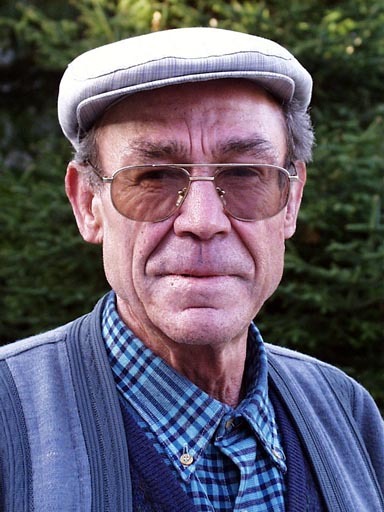
Graz neighbor
A Scottish visitor sitting outside the cafe shared a story. “I taught business linguistics in college, but I’m really an amateur botanist.”
He pointed up at the Penon. “When you climb up there, as you go higher you are going back in time. You are climbing through stages of life.”
He described rare flower species in the national park and their cycle of blooming seasons at different elevations.
Hearing the botanist reminded me of Jack, a geologist in Canada in 1984 as we passed huge gray boulders along Georgian Bay and he said, “If you imagine the Empire State building and put a dime on top, the dime corresponds to human’s time on earth and the structure is the planet, specifically those boulders. They are some of the oldest stones on the planet.” Rock on.
A woman at the table said, “At everyday level, physicists believe that the arrow of time always points in the direction of increasing disorder or entropy.” Someone asked her to explain.
“The second law of thermonuclear dynamics is really simple. An easy explanation is this. If you don’t clean a room, for example, it gets messy, things get moved around. So a person expends energy to clean it up. It’s about transferring energy.”
“Thanks for the insight,” I said to the woman as she negotiated a parking ticket outside her hotel.
“You’re welcome,” she said.
Two fit English hikers passed. “Let’s go and have a little explore,” said a white-haired man to his wife.
“I love you,” she said.
A team of eighteen jubilant British hikers armed with telescopic hiking poles, laminated topographical maps, spring water, binoculars, bird books, food, and esprit de corps left the pueblo for the Sierras.
I needed a new perspective and climbed high where views past Grazalema extended east over rolling rocky fields, tilled earth, rivers, thick cork valleys and distant mountains. Vision encompassed a tiny white pueblo and microscopic humans accompanied by their shadows exploring levels of experience. I focused binoculars in cardinal directions.
One man on his sparse plot of land cleared stones by hand, put them in a wheelbarrow and pushed his load uphill near his house. He dumped stones and returned to his field of laborious love.
A man in cold shade chopped at a thick tree.
Another man used his day clearing stones and hoeing a large area for winter planting.
Sitting on the mountain peak under sky windows my calm mind savored 360 degrees of clean pure light and air.
I danced in the mysterious beauty observing geological manifestations.
“Lunch is served on the terrace,” said an invisible waiter. The main course was water, meat, cheese, bread, two bananas, and an apple. Dessert was stripping off a sweatshirt to feel sun’s heat.
A fast screaming eagle shadow zoomed over me. Zap.
Down below men renovating homes in the shadow of old Roman ruins hammered their way as children ran, yelled and played in a desperate frenzy.
Eagles and vultures soared on currents. Cloud shadows creased the valley obscuring white homes. Twilight smoke curled from chimneys.
ART - A Memoir
Adventure, Risk, Transformation
Freezing gray and black clouds at the summit formed a blanket around my shoulders with essential threads I needed. They’d be measured, cut and woven into a memoir of new/old stories.
Grazalema or Lacilbula in Latin was a 3,000-year old Berber village and white pueblo below the Penon Grande Mountain with 2,300 residents.
Nature formed rain to welcome me home.
Hail the conquering hero fell hard and fast. Inch deep frozen rain accumulated on patio plants. The weather turned bitter cold for a week.
“Unseasonable,” said my petite neighbor outside her blue Moorish door near a red rose bush with sharp thorns.
My patio had twenty plants with orange and lemon trees. It was an intimate old white home with plastered stone walls, cold black and red tiled floors, no central heating, no hot water, gas cookers in a small kitchen, kitsch on walls and mantelpiece, a round writing table with an electric heater for leg warmth, a downstairs bedroom, a large freezing room upstairs with a valley view and a bathroom.
Shortwave reception from a European transmitter picked up fragments about new economic ideas.
“Using resources more efficiently…People are productive…A budget of people and scarce nature…Natural capitalist, high quality kilowatt hours with higher profits and better service...Money an enabler a curse with a price on everything...Create time dollars without a specific value...Mutual credit systems…Invent complimentary currency systems…Functionality and earning credits with mechanisms and the social cost…Transfer the future of money…Economics doesn’t give us the whole picture doesn’t provide all the answers…Price determines behavior maximizing financial consequences…Accountability industry...”
I changed frequency.
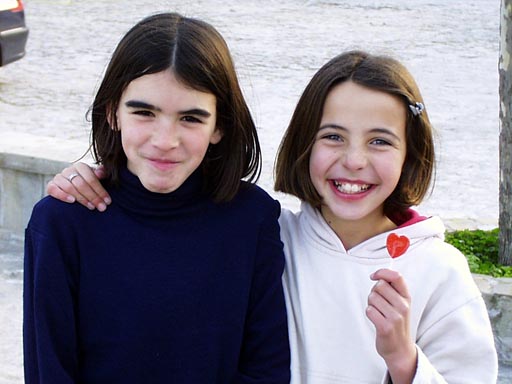
Graz friends live forever
Every day after finishing morning pages I turned off the word machine, unplugged the heater, checked gas cookers were off, packed food, water and compass, laced up hiking boots, noosed a silk scarf, put on a wool hat and gloves and grabbed my thick walking staff to climb back in time.
The first patio door was unlocked with a heavy iron key left by Arabs. They’d ruled al-Andalucía for 800 years.
Keys to heaven dangled from Catholic vestments or battle dress in European paintings. The key to paradise was heavy and manipulated by people with Control, Power, Money and Leverage.
I collided with a low hanging winter orange, laughed and slipped the bolt on the second wooden door, entering the courtyard. A single red rose beneath a lemon tree presented its fragrance. One curled petal went in my pocket.
“Ola,” I said to my smiling neighbor sweeping stone steps. She worked from sunup to sundown.
“Ola. Are you going climbing? It’s a fine day for it.”
“Yes.”
“Adios.”
I passed the shuttered Municipal Bibliotheca where I studied Spanish art history and Andalucía reference books M-F from 1830-2030 as giggling children doing homework made faces. Their behavior was direct and honest. They teased me about sex using their fingers showing what happens between men and women. In-out dialogue. Universal gestures.
Laughing, we shared intuitive awareness until the neurotic rigid librarian needing dental care told us to BE QUIET. I may grow old but I’ll never grow up.
I was a pleasant aberration in their life. Foreigners didn’t stay long in Grazalema. A forcestero in exile is always home.
Girls had bags of pens and pencils giving them diversions and choices. A pen? A pencil? Ink? Which color? They traced animals, people and transcribed religion lessons. Boys messed around and girls studied, a universal educational fact.
I hiked past narrow connected whitewashed stone homes buried below rising Sierra Mountains. Roman cobblestone streets were rough, smooth, jagged, slippery compressed viaducts sloping toward the middle for drainage. Residents staring at Penon Grande saw gray dolomite rocks stab aquamarine sky. Walking residents peering down had eyes pierced by rocks.
I read a poem about Andalucía by Manual Nogales from the El Gastor pueblo. It was about rocks, pines, sun, water, clear mountain air, local pastries, simple men, beautiful women, 1,000 balconies with 1,000 geraniums, old Moorish and Iberian secrets, hidden treasures, red and orange Sierra sunsets, bandits, legends and myths.
I stopped at a family bakery to get T-Rex, their German shepherd. He spent his days chained to a tree and was ecstatic sensing freedom. The family appreciated my willingness to take him climbing.
“Where are you going today?” said the woman.
“We’ll climb the Penon southern route and return in four or five hours. Is that ok?”
“Yes. See you later.”
I secured his long leather leash. We left the pueblo, climbed a rise and descended to a small parking lot. Four adults with an infant got out of a car. A man opened a gate inviting me to follow.
“Gracias.”
They stayed in a sunny meadow. My choice was a steep, rocky, narrow muddy trail in cold shadows. My staff’s worn metal point stabbed soil.
Facing a date with destiny I took my time quickly with muscular skeleton bone skin steps. My heart rate roared a wild-throated vibration in my ears.
T-Rex moved with agility and determination.
Climbing revealed new peaks. Distant miniature valleys spread fir and pine ranges with jutting gray limestone rocks under flowing green mountain ridges. Magic.
We climbed as white and gray dolomite stones tore at my boots.
We ascended through nature’s office exploring new levels of experience. Tributaries extended in four directions.
T-Rex’s powerful legs and energy kept me moving.
I trusted nature with humility and gratitude.
We rested above a valley of Pinsapar Fir surveying a massive ring of limestone peaks. Pinsapar Fir from the Tertiary Period 2.5 million-years ago survived in isolated parts of southern Andalucía and Morocco.
A rolling stone gathers no moss on a luminous soft green mountain peak. Small yellow wildflowers clung to stubborn roots. T-Rex explored ice and flowers. Grazing sheep scattered.

On a plateau meadow dolomite and limestone rocks exploded from the surface. I’d climbed back in time. Snow patches shadowed sky mirrors reflecting prism light. Mountains filled eastern valleys.
I was between peaks on ancient terra firma feeling the sky caress my forehead as gray white and dark blue clouds hurtled over geological evidence in silence. Fast western clouds sailed with invisible perfection.
On a mountain summit time runs faster than at sea level. Gravity is stronger at sea level. Gravity slows time down.
T-Rex shared cold water, raisins, salami, cheese, bread, and friendship. Wind whispered silence. I was frigid then broiling as sun danced through clouds. I savored long deep breaths.
Sitting on jagged stones I read compass instructions: You’re never lost, there’s only various degrees of uncertainty about your position.
I laughed. Vibrations of joy echoed in emptiness.
Far away on planet Earth spinning in a galaxy, countries produced marketing plans selling insecurity to docile buyers.
Governments produced Fear, Uncertainty and Doubt. FUD. Scared consumers washed it down with super-sized sugar drinks, tea, java and fresh coconut juice.
Blind sheep accepted imaginary media nightmares of unknown caloric proportions.
The sky is falling. The sky is falling.
Love is in the air. Run for cover.
If you laugh you last.
*
Source: ART - A Memoir
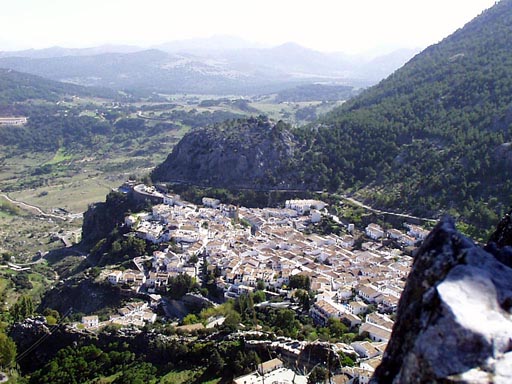
Graz